
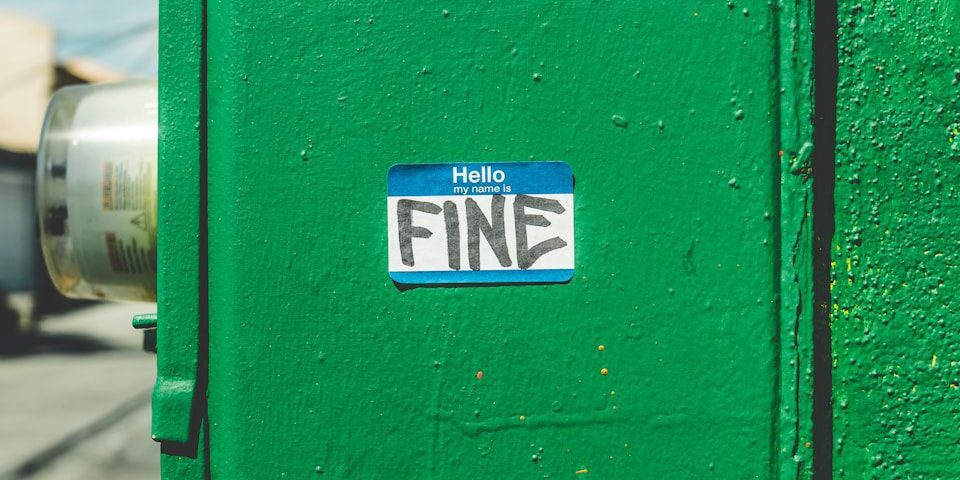
Some websites aren’t broken.
They load.
They display correctly.
They don’t throw errors.
And yet… they aren’t really doing much.
This is one of the most common situations I see: a website that feels fine, but quietly isn’t pulling its weight anymore.
What “fine” usually means
When someone says their website is fine, they often mean:
- Nothing is actively wrong
- It hasn’t caused problems recently
- It still looks acceptable to them
- It doesn’t feel urgent
There’s no crisis pushing a decision. No obvious failure demanding attention.
So the site stays as-is.
The trouble is that “fine” is a very low bar for something that’s supposed to support your business.
Sites that aren’t broken, just ineffective
A site doesn’t have to be broken to be underperforming.
Some common signs show up quietly:
- Fewer inquiries than expected
- People are asking basic questions that the site should answer
- Visitors are reaching out but misunderstanding what you offer
- A sense that the site doesn’t quite reflect where the business is now
None of these feel dramatic. They’re easy to explain away. Business is busy. Markets shift. People behave unpredictably.
But over time, those small signals add up.
The “it hasn’t changed in years” problem
One of the biggest contributors to this situation is age.
Not just visual age, but structural age.
Many websites are built on themes and layouts that made sense five, seven, or even ten years ago. They may still function, but the assumptions behind them are outdated.
Navigation patterns change. Mobile expectations shift. Page layouts evolve. What once felt modern and helpful can slowly become heavy or awkward.
Because the site still works, it doesn’t trigger the same response as something that’s clearly broken. So it gets left alone far longer than it should.
Why people wait too long
There’s a natural tendency to delay addressing a site that isn’t causing pain.
Redesigns feel like a big commitment.
It’s hard to justify change without a clear problem.
And there’s always something else that feels more urgent.
So people tweak around the edges instead. A new plugin here. A small content update there. A fresh image swapped in.
Those changes can help temporarily, but they don’t address deeper issues related to structure, flow, or age.
Eventually, the gap between what the site could be doing and what it is doing becomes noticeable.
What “working” actually looks like
A website that’s working well doesn’t need constant attention.
It:
- Sets expectations clearly
- Helps people understand what you offer
- Guides visitors toward the next step without friction
- Reflects the current version of your business, not a past one
When a site does those things, it feels supportive rather than neutral. You don’t have to compensate for it in conversations or explanations.
That’s a very different experience from “fine.”
When it’s time to take a closer look
If your site hasn’t been meaningfully revisited in years, even if it still functions, it’s worth pausing to assess how well it actually supports your goals now.
That doesn’t automatically mean a full rebuild or a dramatic overhaul. Sometimes it starts with a careful review to understand what’s helping and what’s quietly getting in the way.
The key is recognizing that effectiveness matters more than survival.
Paying attention before frustration sets in
Websites rarely stop working overnight.
They fade out of alignment slowly, as businesses grow and expectations change.
Catching that drift early makes decisions easier. Waiting until frustration builds usually makes them harder to handle.
A site doesn’t have to be broken to deserve attention. Sometimes “fine” is simply a sign that it’s time to look a little closer.
